Overview
ATTENTION: Regulations changed significantly in 2023. The new lockout/tagout training is based on sections 195 to 207 of the 2023 OSHR. Make sure your employees are up to date.
Like all our training programs, we present the correct principles to apply at work, the tools available on the market, the relevant legal aspects, and applicable standards… BUT Safety Training's lockout/tagout program offers you something more.
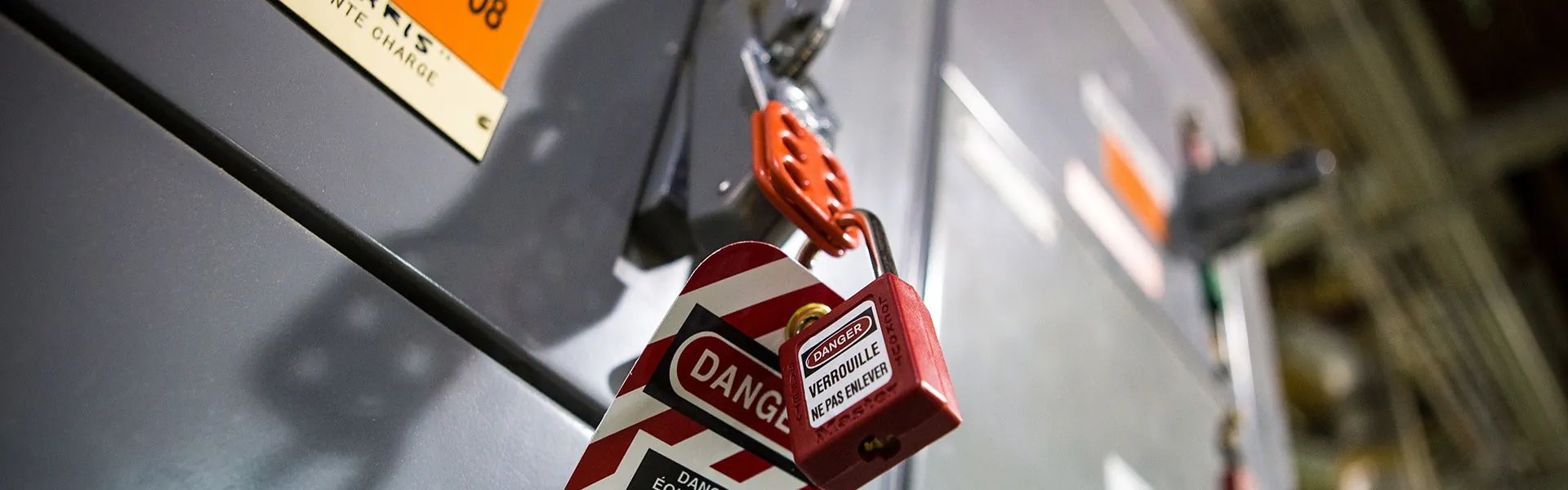
Lockout/tagout involves practices and procedures aimed at neutralizing all energy sources on a piece of equipment, machine, or tool before a worker performs any work on it.
This procedure is mandatory under the OSHR. It ensures that a worker can work on equipment safely.
Fundamental principle
ZERO ENERGY
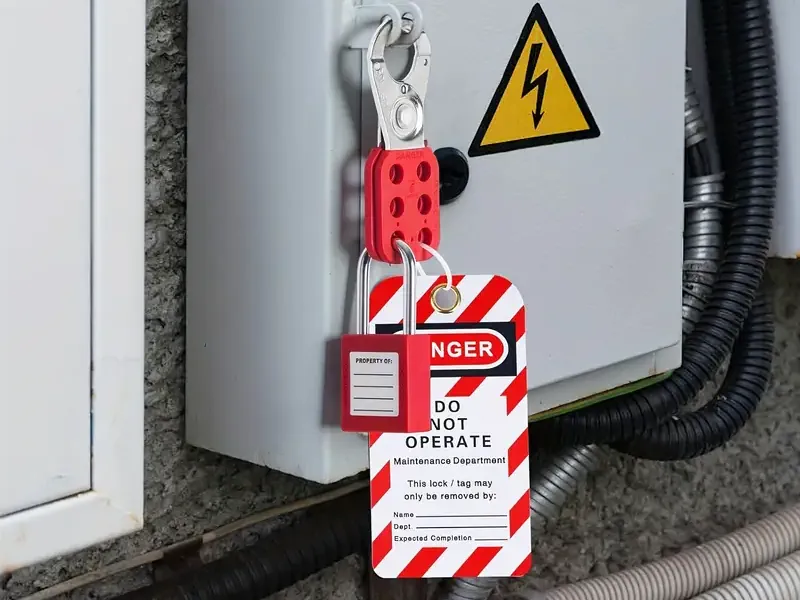
No work on equipment shall be performed unless all its energy sources have been previously neutralized, locked out, and tagged.
Regulations and Legislation
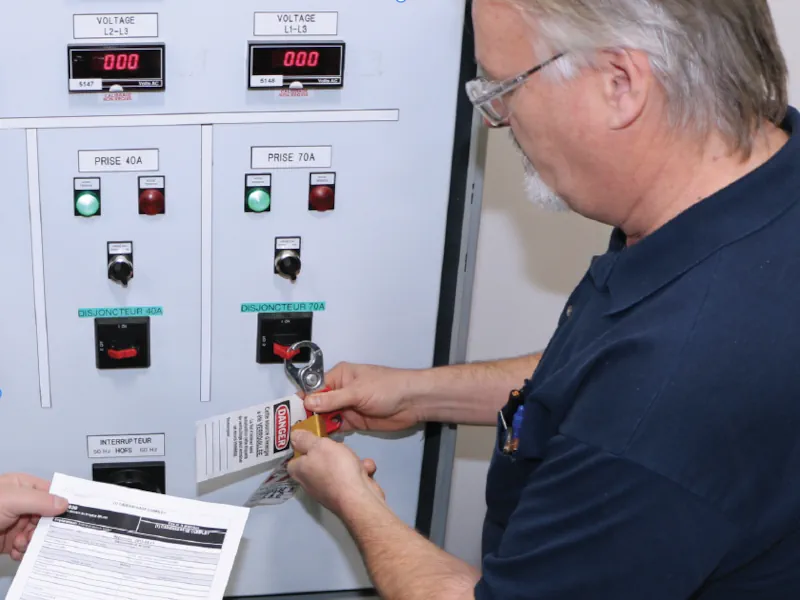
The training is based on sections 195 to 207 of the 2023 Regulation Respecting Occupational Health and Safety (OSHR), which specifically govern lockout/tagout and hazardous energy control in Quebec.
Laws and standards covered
- OSHR — Sections 195 to 207 (2023 version)
- Act Respecting Occupational Health and Safety (OHSA)
- CSA Z460 Standard — Control of Hazardous Energy
- Employer due diligence
- Worker personal responsibility
Energy types covered
- Electrical energy
- Hydraulic and pneumatic energy
- Mechanical energy (gravitational, springs)
- Thermal and chemical energy
- Radiant energy
Lockout/Tagout Procedure — Steps
Identify energy sources
Identify all energy sources associated with the equipment: electrical, hydraulic, pneumatic, mechanical, thermal, and chemical.
Notify and de-energize
Notify all affected persons, shut down the equipment following the normal procedure, and de-energize it in a controlled manner.
Isolate energy sources
Actuate all isolation devices to neutralize each energy source identified in step 1.
Apply lock and tag
Attach a personal lock to each isolation device. Each worker performing work must apply their own lock.
Release residual energy
Dissipate or restrain residual energy (discharge capacitors, release springs, purge pneumatic circuits, etc.).
Verify zero energy state
Verify that the equipment is in a zero energy state before any work begins. Attempt to start it to confirm.
Restore to service
Once work is completed, ensure all workers are clear, remove locks in reverse order, and restore the equipment to service safely.
Safety Training offers a Satisfaction or Money-Back Guarantee on this training. Our instructors adapt to your company's reality and your specific equipment for 100% relevant training.