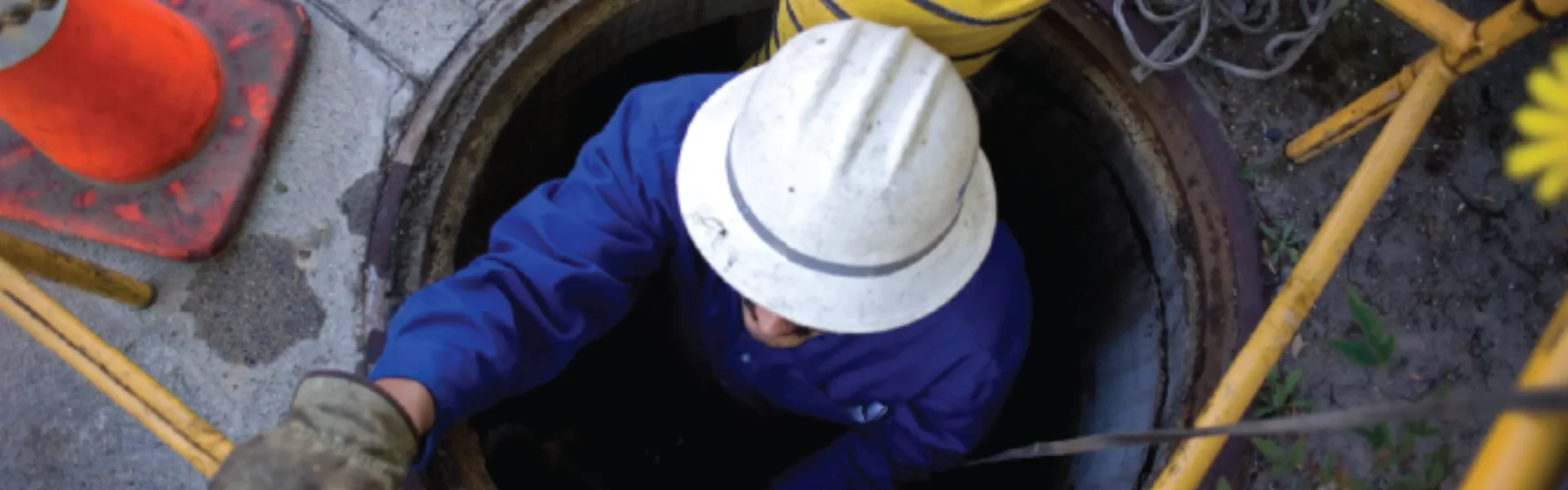
Description
Confined spaces are difficult to manage because there is no typical or standard confined space — no tricks or quick fixes to eliminate all accident risks during work in restricted spaces.
It is essential to understand the risks of a confined space, because they are often invisible and poorly understood. Accidents occur when people decide to enter confined spaces without first receiving the necessary training or being adequately informed of the risks.
Confined space training addresses the hazards you face, how to identify them, the necessary protective equipment, entry procedures, emergency procedures, and legal obligations.
60%
of confined space fatalities are rescuers
These are heroes who enter to save a colleague in distress — without training, without proper equipment — and lose their lives in the process. Adequate training can prevent these avoidable tragedies.
The Risks
Half of all confined space deaths occur due to oxygen deficiency. The main risks associated with confined spaces are:
-
Oxygen-deficient atmosphere
Under-oxygenation or over-oxygenation. The air may contain too little or too much oxygen, creating an immediately fatal atmosphere with no visible warning signs.
-
Fire or explosion
Presence of flammable or explosive gases. A simple electrical tool, spark, or open flame can trigger a devastating explosion.
-
Toxicity
Accumulation of toxic gases (H₂S, CO, CO₂, etc.). Some gases are odourless and colourless — they kill before the victim even realizes they are in danger.
-
Drowning and engulfment
Drowning in liquids or engulfment in free-flowing materials (grain, sand, mud). Confinement makes escape impossible.
Legal Definition of a Confined Space
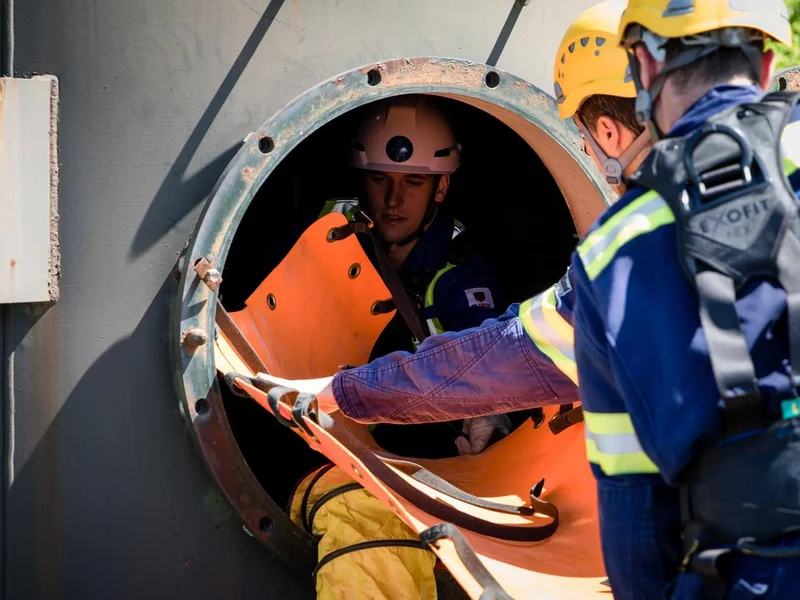
Any totally or partially enclosed space, such as a tank, silo, vat, hopper, chamber, vault, pit (including a slurry pit), sewer, pipe, chimney, manhole, tank car or truck tank, or wind turbine blade, that presents one or more of the following risks due to confinement:
- A risk of asphyxiation, poisoning, loss of consciousness or judgment, fire, or explosion associated with the internal atmosphere or temperature;
- A risk of engulfment;
- A risk of drowning or being swept away due to the level or flow of a liquid.
Section 51.7 of the OHSA requires every employer to inform workers of the risks associated with their work and to train them so that they have the skills and knowledge required to perform their work safely.
Employer Obligations
Before allowing any person to enter a confined space for inspection, cleaning, or maintenance purposes, the employer must:
- Provide instructions and entry protocols before entry;
- Provide emergency response procedures;
- Allow the use of adequate protective equipment;
- Ensure that workers have received the required training.
This training is an essential tool for the safety of everyone who enters a confined space — workers, managers, and companies requiring CNESST OHS accreditations.
A good rule to follow
- If you cannot verify the atmosphere,
- if you cannot ventilate the space,
- if you are not wearing a respirator,
- if you do not have an approved entry protocol,
Then, do not enter!