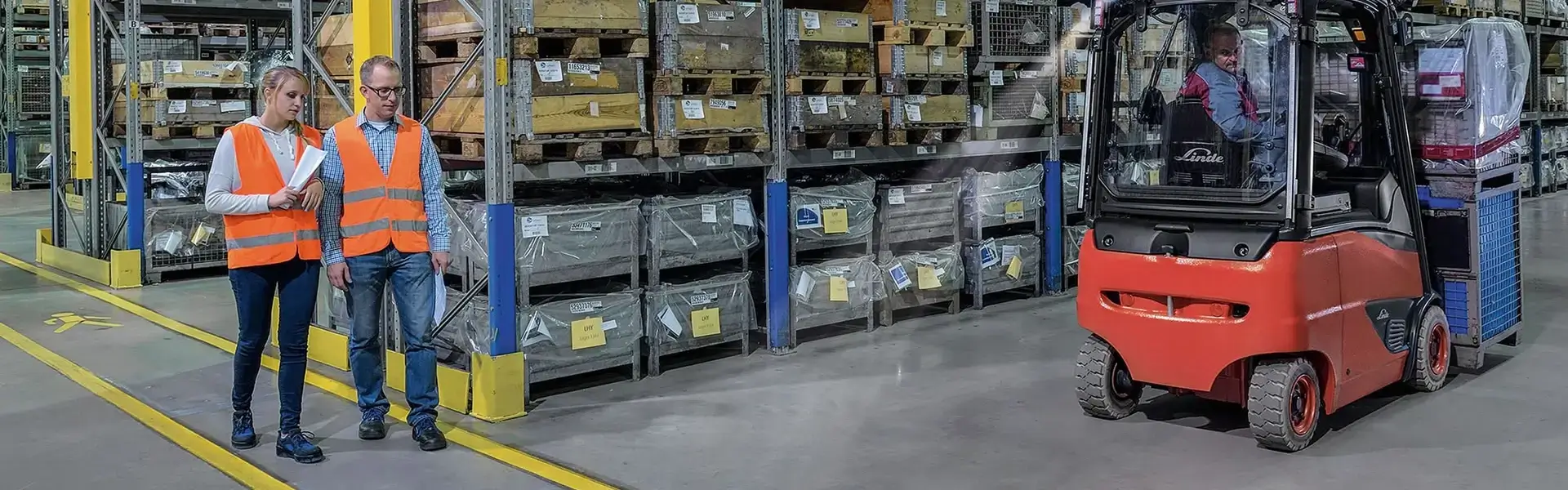
Training Description
At Safety Training, a training program is far more than a collection of information that quickly fades from memory. Our training programs are smart, effective, and tailored to your specific operational needs.
TRAINING OFFERED IN FRENCH or ENGLISH. We also have documentation in SPANISH (interpreter required), depending on the type(s) of forklifts you use.
Training Objective
The goal of forklift operator training is to raise participants' awareness of the hazards of operating forklifts and to foster better working practices.
We will provide the tools needed to better assess forklift stability while in motion, load handling, incline travel, stacking/unstacking operations, traffic rules, and more.
- Smart, well-designed training: We understand industry demands and know how to balance productivity and safety.
- Just right — not too much, not too little: Our training is tailored to each type of forklift you operate.
- Comprehensive training: We cover all the points your employees need, including battery loading, replacement and maintenance, and the use of propane, gasoline, and diesel.
How the Training Works
Theoretical component
Practical content: Awareness training with concrete examples and clear explanations from one of our certified, experienced instructors.
Knowledge assessment: Theoretical and practical knowledge of operators is assessed during the training, and the program is adapted to each participant's experience level.
Attentive instructor: The instructor will consult a supervisor if there are any doubts about a participant's abilities, or will outline the steps needed to complete practical training for beginner operators.
All aspects recommended by CSA standard B-335-15 are covered to ensure this training is recognized by CNESST.
Practical component
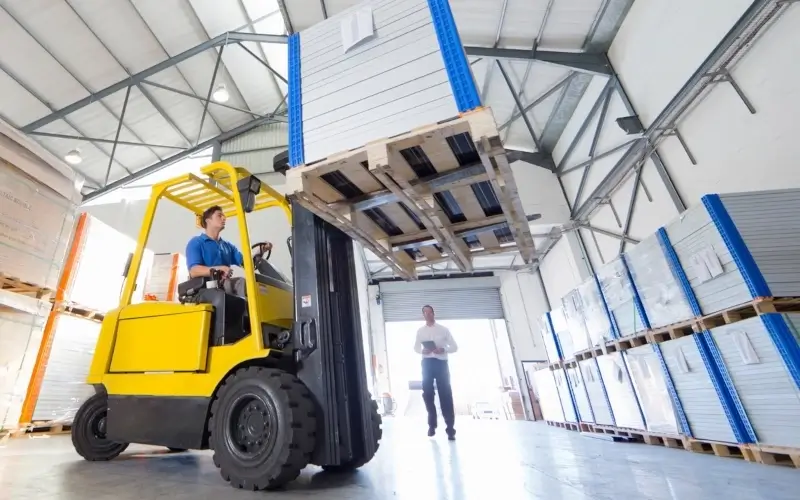
Learning the correct safe driving techniques for a forklift can't happen in a classroom.
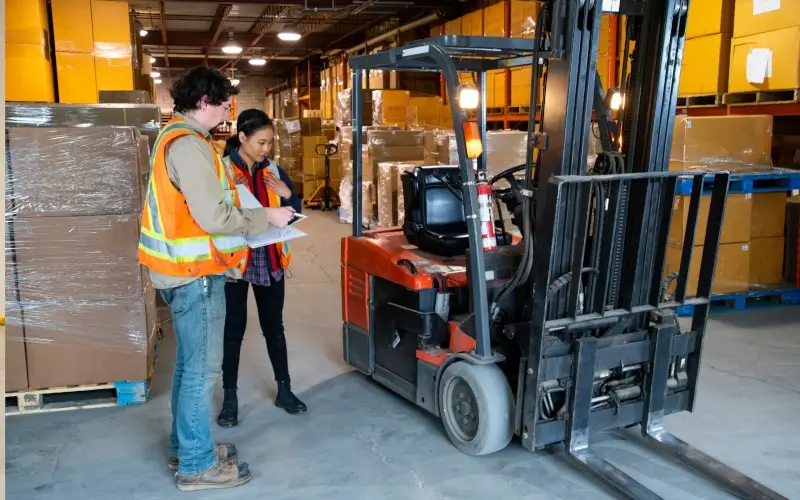
That's why CNESST requires practical training at your workplace, using your own forklift, under real working conditions, in order to issue a forklift operator card to your employees.
We begin with a daily inspection of your forklift, followed by a driving test to validate that employees can apply the techniques learned during the theoretical component.
If you wish, this practical session can take place outside of regular business hours to minimize disruption to your operations.
A Promise to Your Employees
You will leave this training and your life won't have changed. You'll remain the same person and do your work in almost the same way.
However, you will have learned a few small things, you will be better at recognizing your risky activities, and you will be more aware of the consequences your actions can have on yourself, your colleagues, and your families.
You will understand the financial impact of a workplace accident and be more conscious of the effects it can have on your life and the lives of your family.
Regulatory Requirements
We offer training on the operation of counterbalanced forklifts (propane, gasoline, diesel, or electric), narrow-aisle forklifts (Raymond, Reach), telescopic forklifts (Skytrack, Zoom boom, Merlo), and electric pallet trucks, in accordance with CSA standards B 335-15 (R2020) and ASME B56.1.
The training also meets the requirements of section 256.3 of the OSHR — Forklift Operator Training. A forklift must only be operated by an operator who has received:
- Training covering: basic concepts, the work environment, forklift operation, and safety rules;
- Practical training under the supervision of an instructor: starting, moving, stopping, load handling, and all other required manoeuvres.