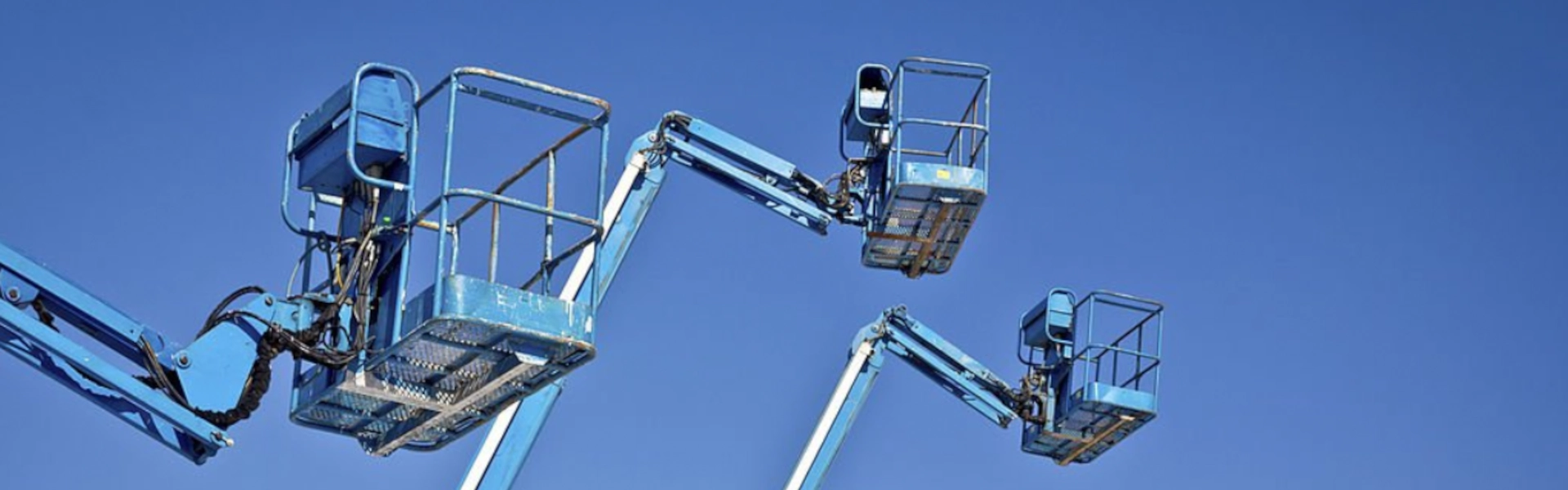
Description
Aerial work platforms (boom lifts) and scissor lifts are lifting devices designed for working at heights. Generally designed to elevate one or two workers and their equipment, they are sometimes indispensable due to their versatility and ease of movement.
Several types of equipment are available on the market and, while relatively easy to operate, they are no less dangerous. CSA standard B354 recommends a refresher training every three years.
A full day of training includes both a theoretical component and a practical component conducted under safe conditions that closely replicate real working conditions.
ATTENTION: The Construction Safety Code (CSC) has changed. Practical training for an employee working on a construction site who has never received initial training must last at least one hour at the controls per type of equipment used.
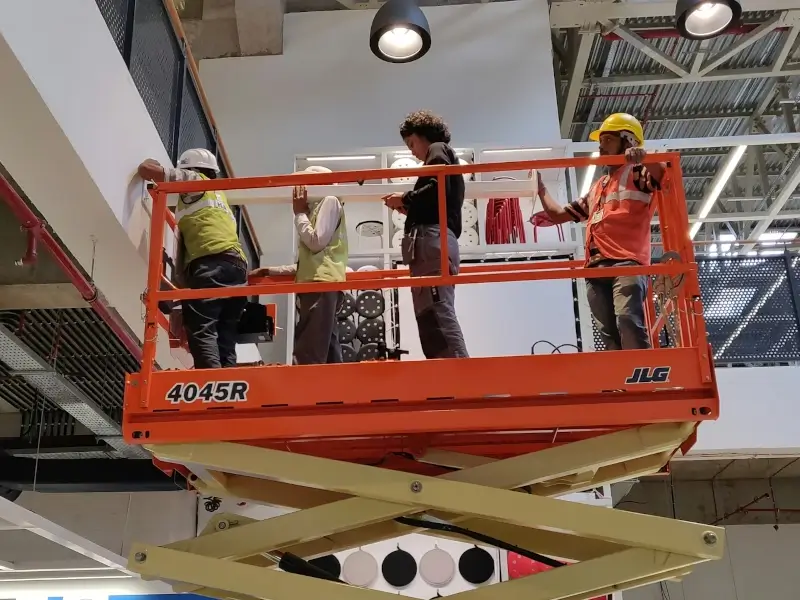
« Even the best training in the world cannot prevent all accidents… but together, we can make a difference. »
Aerial work platform training has certain unique features:
— Covers several ANSI/CSA standards.
— Must comply with the OHS Act and OHS Regulation.
— Includes a section on work on construction sites.
— Safety Training is accredited for construction site training.
Training Content — 10 Modules
-
Good common sense
- Importance of preparation before performing a task
- Use of appropriate PPE
- Following employer-recommended procedures
- Real-life examples and CNESST investigation reports
-
Regulations
- OHS Act: responsibilities of stakeholders
- OHS Regulation, Construction Safety Code (CSC)
- Bill 35: increased fines
- Bill C-21: criminal charges
- Due diligence — ANSI/CSA Standards
-
Stability
- Stability concepts
- Nameplate / data plate
- Safety features
- Tip-overs and rollover hazards
-
Equipment selection
- Criteria for selecting a lifting device
- Renting aerial work platforms and boom lifts
-
Inspections and maintenance
- Initial inspection: obligation, documentation
- Periodic inspection
- Logbook maintenance and record-keeping
- Daily visual and functional inspection
- Preventive maintenance program
- Lockout/tagout during repairs
-
Operation
- Construction sites
- Work zone and power lines
- Weather conditions
- Practical knowledge
-
Hazard: carbon monoxide
- Risks in confined or semi-enclosed spaces
- Detection and emergency procedures
-
Refuelling and recharging
- Safe refuelling procedures
- Battery recharging
-
Fall protection
- Boom lift vs. scissor lift
- Safety harnesses and anchor points
- Inspection, maintenance, and decommissioning
-
Universal signalling system
- Standardized signals between operators
- Appendices: emergency equipment, Beaufort scale, stability control systems